Explore Effective Residential Demolition Techniques Boynton Beach that help homeowners complete projects safely while meeting local standards. Get help today.
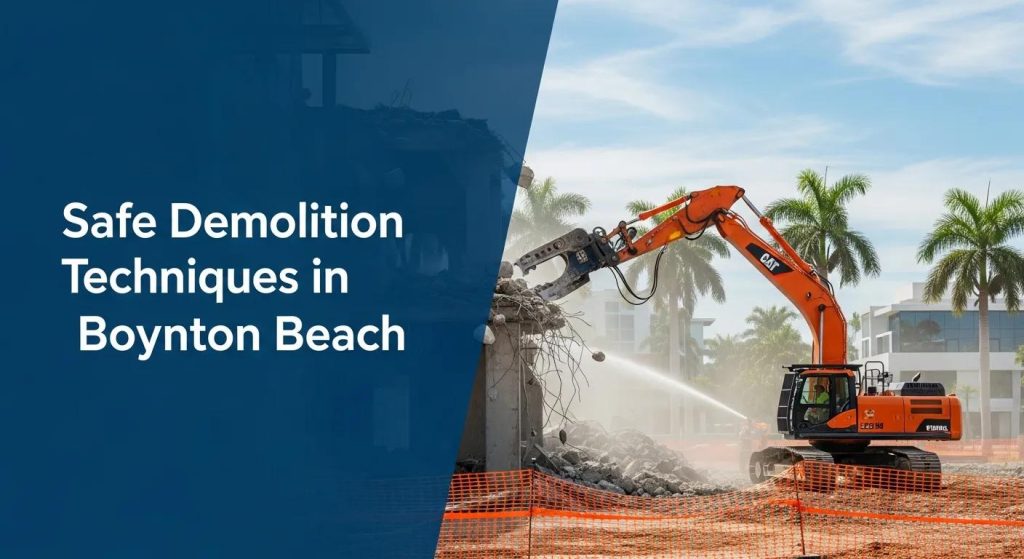
Safe Demolition Techniques in Boynton Beach
Residential demolition requires careful dismantling of structures while maintaining safety and compliance with local regulations. In Boynton Beach, accepted demolition techniques prioritise worker and public safety, limit environmental impacts, and respect community standards. This guide describes safe practices, required permits, environmentally preferable methods, and site-preparation steps for subsequent construction such as fence installation. Homeowners and contractors will gain practical guidance to achieve a compliant, efficient demolition process.
What Are the Safest Residential Demolition Practices in Boynton Beach?
Safety is the primary concern in residential demolition, particularly where local regulations are stringent. Effective practice combines formal safety protocols, certified protective equipment, and strict regulatory compliance. Adherence to these measures reduces operational risk and supports a controlled worksite.
Key Safety Protocols for Residential Demolition Sites
Key safety protocols for residential demolition sites include:
- Site Assessment : Conducting a thorough assessment of the site to identify potential hazards such as electrical lines, gas pipes, and structural weaknesses.
- Clear Communication : Ensuring all team members are aware of their roles and the safety measures in place.
- Emergency Preparedness : Having a clear plan for emergencies, including access to first aid and emergency contacts.
These procedures are fundamental to preventing accidents and protecting both workers and adjacent residents.
Research on risk assessment and management further supports the central role of safety planning in demolition projects.
Residential Demolition Safety & Risk Assessment
Risk assessment informs the safety budget for a demolition project and guides mitigation of potential hazards. Demolition safety management is essential to control site dangers in residential areas. The Bureau of Indian Standards (BIS) has published guidelines on demolition safety management that may be adopted to ensure safe operations.
Development of a framework for risk assessment in building demolition works, DJ Patel, 2023
Essential Protective Equipment and Procedures
Essential protective equipment and procedural controls for demolition include:
- Personal Protective Equipment (PPE) : Workers should wear hard hats, safety goggles, gloves, and steel-toed boots to protect against injuries.
- Dust Control Measures : Implementing dust control measures, such as water spraying, to minimize airborne particles that can affect health.
- Proper Training : Ensuring all workers are trained in the use of equipment and “safety procedures” to reduce the risk of accidents.
Compliance with these equipment standards and procedures materially improves on-site safety.
Which Permits and Regulatory Requirements Govern Residential Demolition in Florida?
Residential demolition in Florida is regulated by permits and statutes designed to protect safety and the environment. Familiarity with applicable state and local requirements is necessary to avoid penalties and ensure lawful project execution.
Understanding Florida State and Boynton Beach Demolition Permits
Common permit requirements for residential demolition in Florida include:
- Demolition Permit : A specific permit that must be obtained from the local government before any demolition work begins.
- Environmental Permits : Depending on the location, additional environmental permits may be necessary to address potential impacts on local ecosystems.
These permits enforce state and local standards to protect public health, the environment, and community welfare during demolition.
How to Comply with Local Environmental and Safety Regulations
Compliance with local environmental and safety regulations requires:
- Regular Inspections : Conducting regular inspections to ensure that all safety measures are being followed.
- Documentation : Keeping detailed records of all permits, inspections, and safety protocols to demonstrate compliance.
- Community Engagement : Engaging with the local community to inform them of demolition activities and address any concerns.
Adherence to these practices documents regulatory compliance and reduces legal and environmental risk.
What Environmentally Friendly Demolition Methods Are Recommended for Residential Projects?
Contractors increasingly adopt environmentally preferable demolition methods. These techniques reduce waste volumes and support sustainable construction practices.
Techniques for Sustainable Material Recycling and Waste Management
Sustainable recycling and waste-management techniques include:
- Deconstruction : Carefully dismantling structures to salvage materials for reuse, reducing landfill waste.
- Recycling Programs : Implementing recycling programs for materials such as concrete, metal, and wood to minimize environmental impact.
- Waste Audits : Conducting waste audits to identify recyclable materials and improve waste management strategies.
Collectively, these methods support a circular approach to demolition and align projects with contemporary environmental standards.
Florida policy initiatives further encourage recycling of construction and demolition (C&D) debris.
Florida Policies for C&D Recycling
This document resulted from an Innovative Recycling Grant awarded to Clay County by the Florida Department of Environmental Protection. Clay County contracted the Department of Environmental Engineering Sciences at the University of Florida to evaluate policy options for recycling construction and demolition debris. The report provides Florida municipalities with an overview of options for promoting C&D debris recycling.
Government policies for increasing the recycling of construction and demolition debris, K Cochran, 2007
Benefits of Selective and Deconstruction Demolition Approaches
Selective demolition and deconstruction provide multiple operational and environmental benefits:
- Cost Savings : By salvaging materials, contractors can reduce disposal costs and potentially generate revenue from reused materials.
- Environmental Impact : These methods significantly lower the environmental footprint of demolition projects by diverting waste from landfills.
- Community Relations : Demonstrating a commitment to sustainability can enhance a contractor’s reputation within the community.
Adopting these approaches benefits the environment and reinforces the contractor’s business model.
Studies of deconstruction in Florida document its practical implementation and role in sustainable development.
Implementing Deconstruction in Florida: Policy & Sustainability
Deconstruction, the selective dismantling of structures for material reuse, offers a sustainable alternative to traditional demolition by reducing construction and demolition (C&D) waste. The study analyzes economic viability and influencing factors such as cost, labor, and public policy. Case studies highlight potential benefits including reduced landfill waste, resource conservation, job creation, and enhanced community sustainability.
Implementing deconstruction in Florida: Materials reuse issues, disassembly techniques, economics and policy, CJ Kibert, 2000
How Does Residential Demolition Prepare Sites for Fence Installation in Boynton Beach?
Residential demolition is a key preparatory step for subsequent construction activities, including fence installation. Recognising their interdependence enables more effective planning by homeowners and contractors.
Post-Demolition Site Clearing and Grading Procedures
Post-demolition site clearing and grading procedures include:
- Debris Removal : Ensuring all debris is cleared from the site to create a clean and safe area for new construction.
- Grading : Leveling the ground to ensure proper drainage and stability for the fence installation.
- Soil Testing : Conducting soil tests to assess the ground conditions and determine if any additional preparation is needed.
These measures ensure the site meets basic safety and constructability requirements for subsequent work.
Coordinating Demolition with Fence Installation Services
Coordination between demolition and fence installation services requires:
- Scheduling : Aligning the demolition timeline with the fence installation schedule to avoid delays.
- Communication : Maintaining open lines of communication between the demolition team and the fence installers to address any issues that may arise.
- Site Access : Ensuring that the site remains accessible for both teams during the transition from demolition to installation.
Effective coordination reduces delays and contributes to predictable project outcomes.
What Are the Typical Costs and Timelines for Residential Demolition Services in Boynton Beach?
Accurate understanding of demolition costs and timelines is necessary for effective project planning. Multiple variables affect estimates and scheduling, so precise information should be obtained prior to commencement.
Factors Influencing House Demolition Costs in Boynton Beach
Key factors influencing house demolition costs include:
- Size of the Structure : Larger homes typically incur higher demolition costs due to the increased labor and equipment required.
- Location : The proximity to disposal sites and local regulations can affect overall costs.
- Material Type : The materials used in the construction of the home can impact disposal fees and recycling opportunities.
Considering these variables enables more accurate budget planning.
Average Project Duration and Scheduling Considerations
Typical residential demolition projects in Boynton Beach range from one to three weeks, depending on the following factors:
- Project Size : Larger projects may take longer to complete due to the complexity of the demolition.
- Permitting Process : Delays in obtaining necessary permits can extend the timeline.
- Weather Conditions : Adverse weather can impact scheduling and project completion.
Project schedules should incorporate permit lead times and weather contingencies to mitigate delays.
| Factor | Description | Estimated Cost |
|---|---|---|
| Size of Structure | Larger homes require more resources | $5,000 – $15,000 |
| Location | Proximity to disposal sites affects costs | Varies by distance |
| Material Type | Different materials have varying disposal fees | $1,000 – $3,000 |
Frequently Asked Questions
What should homeowners consider before starting a demolition project?
Before commencing demolition, homeowners should assess structural stability and identify hazardous materials, such as asbestos or lead paint, that require specialised handling. Compliance with local zoning regulations and acquisition of required permits is essential to avoid legal consequences. Owners should also establish a project timeline and budget that account for debris removal and site restoration costs.
How can homeowners ensure their demolition project is environmentally friendly?
To reduce environmental impact, homeowners may select deconstruction to salvage materials for reuse. Contractors should operate documented recycling programmes for concrete, metal, and wood and perform a waste audit to identify recyclable streams and optimise waste management.
What are the potential risks associated with residential demolition?
Residential demolition entails risks including structural collapse, exposure to hazardous substances, and incidents involving heavy machinery. Injuries from falling debris or improper equipment operation are possible, and improper handling can cause environmental contamination. Mitigation requires comprehensive site assessments, enforcement of safety protocols, and verified worker training.
How can homeowners find reliable demolition contractors in Boynton Beach?
Locate reliable demolition contractors by obtaining professional recommendations and reviewing verified online evaluations. Confirm licensing and insurance status, solicit multiple written quotes for comparison, and request client references and project portfolios to verify performance and quality.
What steps should be taken after demolition to prepare for new construction?
Post-demolition steps include complete debris removal to secure a safe site, grading to ensure drainage and foundation stability, and soil testing to determine any remedial needs. Coordination with subsequent construction teams on scheduling and site access will facilitate a seamless transition.
Are there any financial assistance programs for homeowners undergoing demolition?
Financial assistance may be available for homeowners, especially for hazardous-material remediation or low-income households. Local government programmes can provide grants or low-interest loans for safe demolition and site remediation. Community development non-profit organisations may offer additional support. Homeowners should investigate local resources and programme eligibility.
Conclusion
Understanding safe and compliant residential demolition techniques in Boynton Beach is essential for homeowners and contractors. By prioritising safety, adhering to regulations, and adopting environmentally friendly practices, homeowners and contractors can ensure a successful demolition process that prepares sites for future projects. Consult available resources to identify qualified contractors and obtain further guidance on demolition strategies. Initiate the next phase of the project with informed planning.