Excavation and Demolition Cutler Bay | Efficient Methods
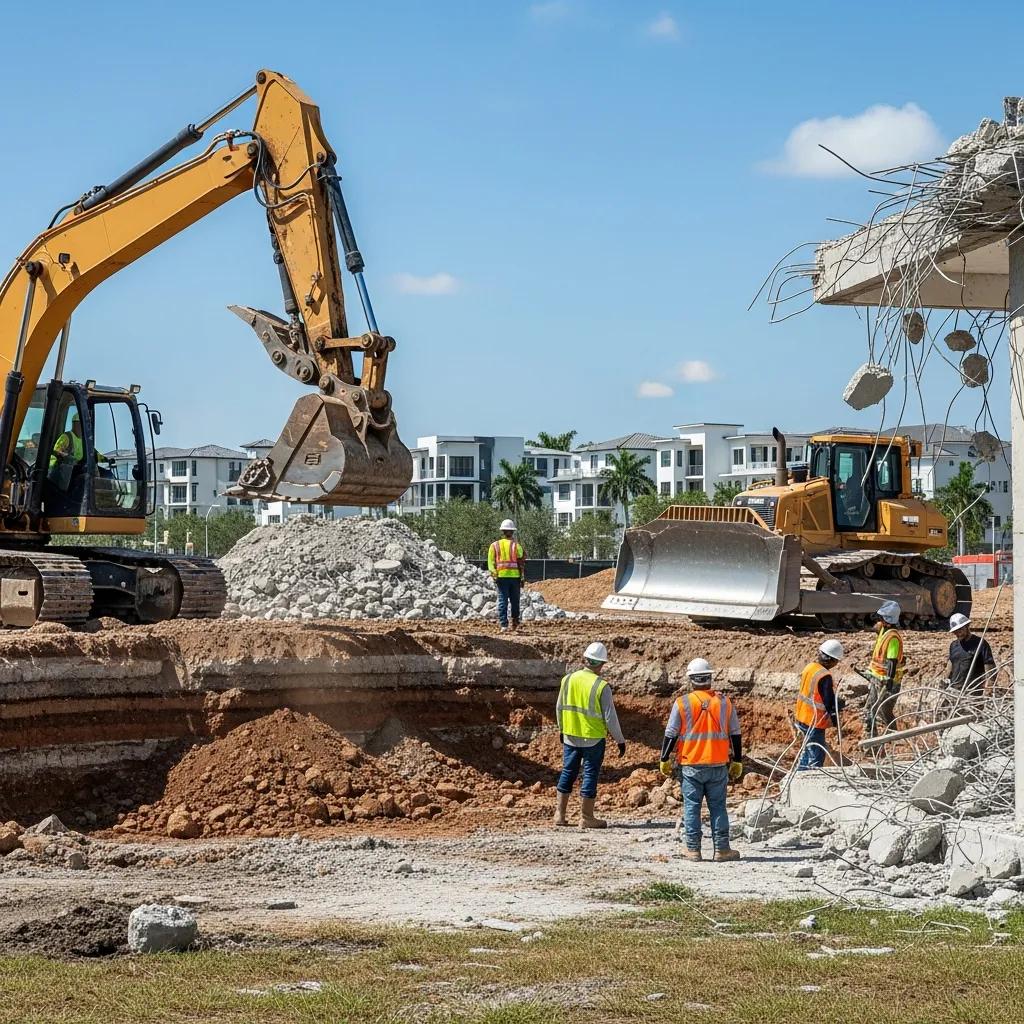
Secrets to Efficient Excavation and Demolition in Cutler Bay: Expert Strategies for Residential and Commercial Projects
Efficient excavation and demolition are essential for residential and commercial construction. Mastery of these processes affects schedules, budgets, and site safety. This article presents practical strategies for excavation and demolition in Cutler Bay: essential steps, safety protocols, equipment selection, and contemporary techniques that support reliable project delivery. Contractors frequently face regulatory and site-preparation challenges that cause delays and added cost. Applying best practices and using modern equipment mitigates those risks. The sections below cover demolition steps, site clearing, safety protocols, equipment, and current demolition methods.
Understanding the financial implications of demolition is essential; detailed cost estimation is a critical stage of project planning.
Demolition Project Cost Estimation & Analysis
This research develops a quantitative method to estimate demolition project costs. It presents a cost-analysis approach to systematically break down the cost components involved in demolishing a structure.
Estimating demolition costs for single residential buildings, C Liu, 2003
Expert Strategies for Residential and Commercial Projects
Effective excavation and demolition require structured planning and disciplined execution. Core measures include an initial site assessment to identify hazards and constraints, securing permits to ensure regulatory compliance, and applying controlled demolition techniques to limit environmental impact. These steps improve safety and efficiency and help keep projects on schedule and within budget.
Key Steps in the Process
The demolition process comprises several essential steps to ensure safety and regulatory compliance. These include:
- Site Assessment and Planning: A comprehensive evaluation of the site identifies potential hazards, such as underground utilities or structural weaknesses.
- Permit Acquisition: Securing permits from local authorities avoids legal issues and fines.
- Utility Disconnection: Before demolition starts, all utilities must be safely disconnected to prevent accidents.
Key Steps in the Excavation and Demolition Process in Cutler Bay
In Cutler Bay, projects follow a standard sequence to maintain safety and efficiency. Start with a thorough site assessment to locate hazards such as underground utilities and structural defects. Then obtain required permits to meet local obligations, and disconnect utilities to render the site safe. These measures reduce risk and enable an orderly project flow.
Site Clearing Preparation
Site clearing must occur before demolition operations begin. The work typically includes debris removal, land grading, and vegetation clearance to prepare for excavation. Proper clearing increases safety and streamlines later demolition and construction tasks by establishing a stable base for subsequent activities.
Managing construction and demolition waste from the site-clearing phase is essential for environmental compliance and operational efficiency.
C&D Waste Best Management Practices
This work links best practices for managing construction and demolition waste across the construction value chain. Systematic implementation of these best practices could
Construction and demolition waste best management practice in Europe, JL Gálvez-Martos, 2018
Safety Protocols
Safety is the primary concern during demolition. Implement comprehensive safety protocols to protect personnel and the public. Key measures include pre-demolition hazard assessments, permit coordination, and final inspections to verify compliance with safety standards. Consistent enforcement of these protocols minimizes risk and preserves a safe worksite.
Essential Equipment
Successful excavation and demolition depend on selecting appropriate equipment. Core machinery includes:
- Excavators: Used for digging and moving large amounts of earth.
- Bulldozers: Ideal for clearing debris and grading land.
- Dump Trucks: Necessary for transporting waste materials off-site.
Modern equipment with enhanced safety features improves operational efficiency and reduces the likelihood of accidents.
Types of Excavation Machinery Used by Contractors
Contractors in Cutler Bay deploy a range of excavation machinery to optimise delivery. Common equipment includes:
- Backhoes: Versatile machines used for digging and material handling.
- Skid Steer Loaders: Compact and maneuverable, ideal for tight spaces.
- Compactors: Essential for soil stabilization and preparing the ground for construction.
Each machine performs a specific role in excavation and contributes to overall productivity.
Modern Demolition Techniques
Contemporary demolition techniques emphasise safety and environmental stewardship. Selective demolition enables controlled dismantling and material recovery. Deconstruction focuses on salvaging reusable materials to reduce waste. Controlled methods, including implosion for large structures, provide precision and enhanced site safety.
Research underscores the role of strategic planning in demolition and shows that optimised approaches can materially influence project outcomes.
Optimized Demolition Project Strategies
The paper finds an optimized demolition project strategy exists between hybrid demolition and
Case study of demolition costs of residential buildings, C Liu, 2006
| Equipment Type | Function | Benefits |
|---|---|---|
| Excavators | Digging and moving earth | High efficiency and versatility |
| Bulldozers | Clearing and grading land | Effective debris removal |
| Dump Trucks | Transporting waste materials | Quick and efficient waste management |
The table summarises essential excavation and demolition equipment, their functions, and associated benefits.
Frequently Asked Questions
What are the environmental considerations in excavation and demolition?
Environmental considerations include waste minimization, emissions reduction, and protection of local ecosystems. Contractors should implement recycling, operate low-emission equipment, and control dust and noise. Compliance with local environmental regulations is mandatory to prevent harm. Prioritising sustainability can also reduce disposal costs and the risk of regulatory fines.
How can I ensure compliance with local regulations during a demolition project?
Ensure compliance by researching applicable laws in Cutler Bay, securing required permits, and notifying local authorities when necessary. Adhere to recognised safety standards such as OSHA. Retain contractors experienced with local requirements and keep regular communication with regulatory agencies throughout the project.
What safety training is required for workers in excavation and demolition?
Workers must receive training in hazard recognition, equipment operation, and emergency response. Training should meet OSHA standards and cover fall protection, PPE use, and safe handling of hazardous materials. Conduct regular refresher courses and on-site drills to maintain competency.
What are the benefits of using modern demolition techniques?
Modern demolition techniques improve safety, reduce environmental impact, and increase operational efficiency. Selective demolition enables material salvage. Controlled methods, such as implosion for large structures, provide precision and reduce risk to surrounding areas. These techniques support sustainability goals and can lower overall costs.
How can I estimate the costs of a demolition project?
Estimate costs by considering the structure’s size and complexity, labor, equipment rental, and disposal fees. Itemise these components and allow for potential challenges like hazardous material removal or site preparation. Engage a professional estimator or experienced contractor and review past project costs to inform the budget.
What types of waste are generated during demolition, and how should they be managed?
Demolition generates concrete, wood, metals, and hazardous materials such as asbestos. Proper waste management protects the environment and ensures regulatory compliance. Implement a waste management plan that prioritises recycling, ensures safe disposal of hazardous waste, and uses segregation and containment. A specialised waste management service can help meet local disposal requirements efficiently.
Demolition and Excavation as Related Processes
Demolition and excavation are related but distinct processes. Demolition involves tearing down existing structures, while excavation focuses on removing earth or rock to prepare a site for construction. Both are critical in construction projects but serve different purposes and require different equipment and techniques.
The 2 4 5 Rule in Excavation
The 2 4 5 rule in excavation is a safety guideline used to determine the maximum allowable depth of an excavation without additional protective measures. It states that for every 2 feet of depth, the excavation should have a 4:5 slope ratio to prevent collapse. This rule helps ensure trench stability and worker safety during excavation activities.
Conclusion
Engaging experienced contractors is essential to achieve efficient and safe excavation and demolition. By following established protocols and applying modern techniques, projects can be completed on time and within budget. Hercules Miami Demolition provides excavation and demolition services in the Cutler Bay area and adheres to local regulations and safety standards. Their commitment to quality and operational efficiency supports both residential and commercial projects.
For information on excavation machinery, contractors reference Construction Equipment Guide to monitor current tools and technologies.
Reference to OSHA demolition safety standards is essential for maintaining a safe work environment during demolition projects.
Conclusion
Engaging experienced contractors is critical to achieve efficient and safe project outcomes. Adherence to established protocols and the use of modern techniques enable timely, on-budget completion. Learn how our expert services can streamline your next project and ensure compliance with local regulations. Contact us for details about our comprehensive excavation and demolition solutions in Cutler Bay.