Miami Demolition Permits | Avoid Delays and Penalties
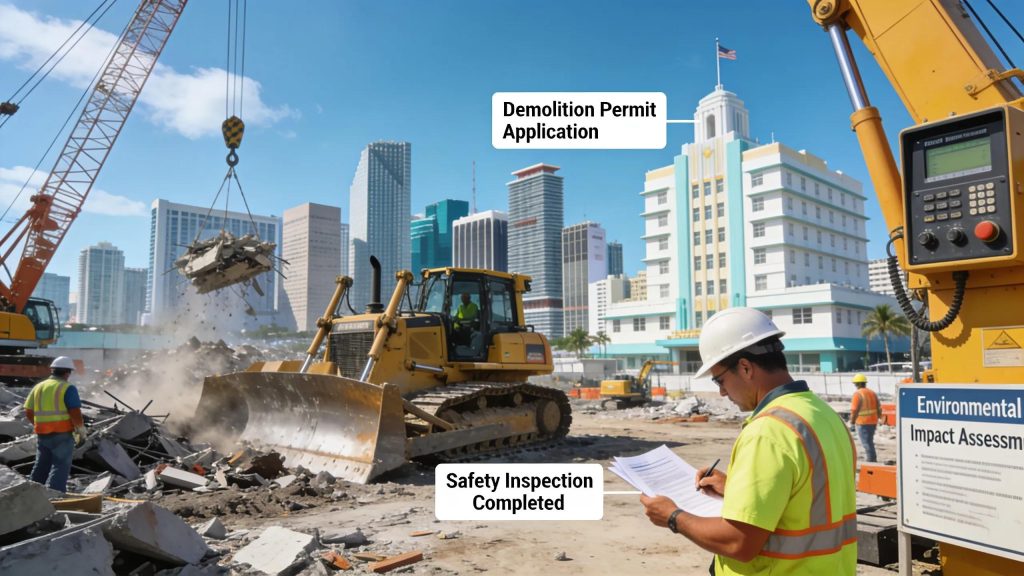
Key Requirements for Miami Demolition Permits: Comprehensive Guide to Application and Compliance
Obtaining a demolition permit in Miami, FL, involves navigating a detailed and multifaceted regulatory framework meticulously designed to ensure public safety, environmental preservation, and structural integrity. Both homeowners and licensed contractors must meticulously document compliance with stringent safety protocols, environmental regulations, and building-code requirements before commencing any demolition work. This comprehensive and authoritative guide consolidates the essential documentation, applicable standards, and key procedural milestones necessary to secure a demolition permit efficiently and in full compliance with local, state, and federal mandates. It highlights important distinctions between residential and commercial permit procedures, underscores potential legal and financial consequences of non-compliance, and includes strategic insights to optimize approval success.
Necessary Documentation
Applicants must submit thorough, accurate documentation satisfying Miami-Dade County’s rigorous regulations. This facilitates timely departmental review and approval while substantiating that the proposed demolition activities will adhere to stringent safety and environmental protection standards. Ensuring comprehensive, complete, and precise submissions is critical to expediting the approval process and minimizing the likelihood of delays or requests for supplemental information, which can significantly impact project timelines and costs.
- Demolition Permit Application: Complete the official Miami-Dade County Building Department application form, which officially initiates the formal and legally binding review and approval process. Ensure that all requested information is accurately provided, as omissions can lead to automatic rejections.
- Structural and Site Plans: Provide detailed, scaled architectural drawings indicating the structure’s layout, property boundaries, adjacent structures, and designated debris staging and removal areas. These plans must comply strictly with local zoning, land-use, and floodplain ordinances, including any requirements related to Miami’s unique coastal environment.
- Contractor Licensing Proof: Submit valid documentation affirming the contractor’s professional licensing, insurance coverage, and qualifications to perform demolition activities safely and effectively. Verify that the contractor holds an active Miami-Dade County certification compliant with state and local licensing laws and maintains adequate liability and workers’ compensation insurance.
- Utility Disconnection Confirmation: Provide official evidence of the disconnection of all utilities—electricity, water, gas, sewer, and telecommunications—to prevent hazards during demolition. Coordination with utility providers for safe disconnection is mandatory and should be planned in advance to avoid work interruptions.
- Hazardous Material Surveys and Abatement Plans: For structures containing asbestos, lead-based paint, polychlorinated biphenyls (PCBs), or other hazardous substances, submit certified abatement plans and survey reports prepared by qualified environmental professionals. These must comply with federal and state environmental regulations, including those set forth by the Environmental Protection Agency (EPA) and Occupational Safety and Health Administration (OSHA).
- Environmental Permits: Obtain all applicable environmental clearances, particularly if demolition may impact wetlands, endangered species habitats, protected ecosystems, or water quality. Coordination with agencies such as the Florida Department of Environmental Protection (FDEP), the U.S. Environmental Protection Agency (EPA), and local water management districts may be required. This includes erosion and sediment control permits and stormwater management plans.
- Historical Preservation Approvals: If the property is designated as a historic site or located within a historic district, additional approvals from the Miami-Dade Historic Preservation Board or related entities are essential prior to permit issuance. Failure to secure these can result in fines and legal injunctions.
Failure to provide complete or accurate documentation can cause significant delays or outright denial of permit applications, with substantial project cost implications. Early consultation with Miami-Dade County officials or licensed professionals experienced in Miami demolition permitting is highly advisable to ensure compliance and streamline processing.
Regulatory Standards
Demolition activities in Miami, FL, are stringently regulated by a complex overlay of local, state, and federal statutes designed to safeguard public health, ensure worker safety, and limit environmental impacts. Key regulatory frameworks governing demolition include the Miami-Dade County Building Code, Florida Building Code (FBC), Occupational Safety and Health Administration (OSHA) regulations, and environmental statutes administered by the Florida Department of Environmental Protection (FDEP) and the U.S. Environmental Protection Agency (EPA). Permit issuance is contingent upon full compliance with these codes and standards, each with rigorous enforcement mechanisms.
Specific mandatory requirements encompass advanced dust control measures using water spraying or dust suppressants, noise abatement adhering to local ordinances and decibel thresholds, debris containment through fencing and netting, maintaining structural stability during all phases of demolition to protect workers and the public, and proper disposal of materials to approved waste processing facilities certified for various types of demolition debris. Contractors are also required to implement erosion and sediment control practices aligned with Miami-Dade’s stormwater pollution prevention plans to protect nearby waterways from contamination effectively.
Moreover, safety protocols must conform to OSHA’s Construction Industry standards (29 CFR 1926 Subpart T), including strict fall protection, scaffold safety, and hazard communication requirements to minimize workplace accidents during demolition.
Frequently Asked Questions
What is the typical timeframe for obtaining a demolition permit in Miami?
The timeframe varies significantly depending on project complexity, application completeness, and the scope of required regulatory reviews. Simple residential demolitions with complete applications may receive approval within 5 to 10 business days. However, complex commercial projects involving hazardous materials, environmental impact assessments, or historical preservation considerations can require several weeks to multiple months to secure all necessary permits. Proactive engagement with the Miami-Dade County Building Department and the submission of comprehensive, well-prepared documentation can significantly accelerate processing times.
Are there fees associated with applying for a demolition permit?
Yes. Fee structures depend on project scope, valuation, and permit type, consistent with Miami-Dade County Building Department fee schedules. Typical fees cover plan review, inspection services, administrative processing, and special assessments such as environmental monitoring or historic district surcharges. Applicants should consult the official county fee schedule or website for current, detailed fee information and anticipate budgeting accordingly.
Can homeowners perform demolition work themselves without a permit?
Generally, a demolition permit is mandatory regardless of whether a licensed contractor or the homeowner performs the demolition. Exceptions may exist for minor interior alterations not affecting structural elements, but these are limited and require explicit verification from Miami-Dade Building Department officials. Obtaining permits is prudent for homeowners to mitigate legal liabilities, ensure compliance, and avoid future complications related to insurance or property transactions.
What are the consequences of not obtaining a demolition permit?
Demolition without the necessary permit can result in substantial civil penalties, stop-work orders, costly project delays, mandatory remediation, and potential legal actions including fines and injunctions. Additionally, unpermitted demolition activity may jeopardize property resale, violate insurance policy conditions, and incur unforeseen remediation or reconstruction expenses. Securing proper permits is essential for protecting both financial and legal interests.
Do I need a different permit for hazardous material removal during demolition?
Yes. The removal and disposal of hazardous materials—including asbestos, lead-based paint, PCBs, and other regulated substances—require specialized permits and adherence to certified abatement procedures mandated by environmental and health authorities. Contractors performing such work must hold relevant certifications and licenses, while strict protocols and safety measures must be followed to protect workers, residents, and the environment during removal and disposal phases.
How can I ensure compliance with environmental regulations during demolition?
Ensure compliance by engaging certified environmental consultants to conduct comprehensive pre-demolition hazardous material surveys and risk assessments. Secure all required environmental permits prior to commencing work. Implement permissible abatement, containment, and waste management practices rigorously, including dust suppression and erosion control plans aligned with Miami-Dade’s environmental requirements. Hire contractors with proven expertise in the local environmental regulatory landscape and ensure project-specific controls are meticulously documented and enforced.
What happens if my permit application is denied?
In the event of denial, the Miami-Dade County Building Department will provide detailed feedback outlining deficiencies or non-compliance issues such as incomplete documentation, failure to meet regulatory standards, or unmet fee obligations. Applicants should carefully address the identified issues and may resubmit their application after corrections. Consulting with county officials or retaining experienced professionals can streamline the amendment process and improve chances of approval upon resubmission.
Additional Best Practices for Successful Demolition Permitting
- Early Engagement: Initiate early and transparent dialogue with Miami-Dade County planning, building, and environmental officials before submitting applications to clarify requirements, identify potential issues, and integrate relevant regulatory feedback into planning.
- Professional Consultation: Employ licensed architects, engineers, certified environmental consultants, and contractors with documented Miami demolition experience to prepare accurate plans and documentation adhering to all local codes and regulations.
- Comprehensive Project Management: Develop detailed project timelines incorporating realistic permit processing durations, environmental assessments, community outreach, and contractor coordination to avoid unforeseen delays.
- Community and Neighbor Notification: Where mandated, notify adjacent property owners, neighborhood associations, and community stakeholders promptly to mitigate concerns, ensure compliance with local ordinances, and foster positive relations.
- Robust Record Keeping: Maintain organized copies of all permit applications, approvals, inspections, environmental assessments, correspondence, and change orders for accountability, transparency, and future reference.
Conclusion
A thorough and up-to-date understanding of Miami’s comprehensive demolition permit landscape is essential for safeguarding public safety, protecting sensitive environmental resources, and ensuring smooth project execution free from regulatory interruptions. Preparing complete, accurate documentation that aligns strategically with stringent regulatory standards significantly reduces administrative delays, minimizes legal exposure, and enhances project predictability. Engaging qualified professionals experienced in Miami’s jurisdiction and leveraging official county resources and consultations enhance the probability of application success and project efficiency.
For authoritative and detailed guidance on Miami demolition permits, visit the Miami-Dade Building Department or consult with experienced demolition permit specialists who can provide personalized advice tailored to your specific project needs.
Need Expert Assistance?
Get personalized guidance on navigating Miami demolition permits, environmental compliance, and best practice project execution. Connect with licensed professionals specializing in local construction, regulatory law, and environmental regulations to ensure your demolition project proceeds efficiently and legally.