Commercial Demolition Process | Guide to Project Success
Essential Steps for Successful Commercial Demolition: Comprehensive Guide for Contractors and Property Owners in Delray Beach
Commercial demolition demands meticulous planning and disciplined execution to ensure safety, regulatory compliance, and operational efficiency. This comprehensive guide outlines the essential steps for successful commercial demolition, offering practical advice tailored for contractors and property owners in Delray Beach. It covers project planning phases, safety protocols, environmental requirements, and the latest equipment used in modern demolition operations. Mastery of these areas minimizes risks and supports a streamlined demolition process.
For stakeholders unfamiliar with demolition procedures, the process can seem complex. This guide simplifies critical planning stages, mandatory safety measures, environmental responsibilities, and the equipment and techniques that enhance operational effectiveness, all within the context of Delray Beach’s local regulations and community standards.
What Are the Key Phases in Commercial Demolition Project Planning?
Planning is the foundation of any successful commercial demolition project. Key phases include defining the project scope, securing necessary permits, and establishing realistic schedules and budgets. Each phase directly impacts safety, regulatory compliance, and overall project success. In Delray Beach, additional factors such as adherence to city-specific zoning laws and environmental ordinances influence demolition timelines and methods.
How to Obtain Necessary Demolition Permits in Delray Beach, FL
Starting a demolition project in Delray Beach requires obtaining the appropriate permits. The process generally involves the following steps:
- Research Local Regulations : Familiarize yourself with Delray Beach’s specific demolition regulations, including zoning restrictions and noise ordinances.
- Complete the Application : Accurately fill out the required application forms available from the Delray Beach Building Department.
- Submit Documentation : Provide necessary documents such as site plans, environmental assessments, and safety protocols.
- Schedule Inspections : Coordinate with city inspectors for pre-demolition site evaluations.
- Await Approval : Approval timelines vary; plan accordingly to prevent project delays.
What Are the Critical Considerations for Project Scheduling and Budgeting in Delray Beach?
Effective scheduling and budgeting are vital for project success. Key considerations include precise cost estimation, realistic timelines that incorporate contingencies, and proper allocation of personnel and equipment. In Delray Beach, contractors must also factor in local weather patterns, such as hurricane season, which can affect scheduling and safety measures.
- Cost Estimation : Accurately estimate costs for labor, equipment, disposal, and any additional fees related to local permits and environmental compliance.
- Time Management : Develop a realistic timeline that accounts for potential delays, including weather-related interruptions common in South Florida.
- Resource Allocation : Ensure availability of all necessary resources, including personnel and equipment, with contingency plans for local supply chain variations.
Which Safety Protocols Ensure Risk Mitigation During Demolition?
Safety is paramount in commercial demolition. Implementing comprehensive safety protocols reduces risks to workers and the public while ensuring compliance with legal requirements. Key measures include formal training, documented emergency procedures, and mandatory use of personal protective equipment (PPE). Contractors in Delray Beach must also comply with Florida Occupational Safety and Health (OSHA) standards and local emergency response plans.
What Are the Mandatory Safety Procedures for Commercial Demolition Contractors?
Commercial demolition contractors must enforce mandatory safety procedures, including:
- Personal Protective Equipment : Ensure all workers wear appropriate PPE such as helmets, gloves, and safety goggles.
- Site Safety Inspections : Conduct regular inspections to identify and mitigate potential hazards, maintaining documentation for regulatory review.
- Hazard Communication : Clearly communicate site hazards to all workers, including risks specific to Florida’s climate and environment.
How Is Asbestos and Hazardous Material Managed Safely in Delray Beach?
Managing hazardous materials, including asbestos, is a critical safety and regulatory priority during demolition. Standard practices involve material identification, controlled removal procedures, and documented disposal in compliance with applicable laws. In Delray Beach, contractors must adhere to federal EPA regulations and Florida Department of Environmental Protection (FDEP) guidelines.
- Asbestos Identification : Conduct thorough inspections using certified professionals familiar with local building codes to identify asbestos-containing materials.
- Safe Removal Practices : Follow established protocols for safe removal and disposal of hazardous materials, ensuring compliance with FDEP and EPA standards.
- Regulatory Compliance : Maintain compliance with all local, state, and federal regulations, including proper notification to Delray Beach authorities.
Research further emphasizes the importance of stringent safety protocols when handling asbestos during demolition.
Asbestos Safety & Monitoring in Commercial Demolition
This study reports on asbestos air monitoring from two demolition projects involving whole-building demolition of structures containing asbestos. A 1995 study estimated approximately 44,000 commercial buildings are demolished annually in the United States.
Asbestos release from whole-building demolition of buildings with asbestos-containing material, 1995
How Do Environmental Regulations Impact Commercial Demolition Projects in Delray Beach?
Environmental regulations play a significant role in demolition operations. Contractors must comply with these requirements to avoid legal issues and implement sustainable waste and emission management practices. Delray Beach enforces additional local environmental protections, including stormwater management and noise control ordinances, which must be integrated into demolition planning.
What EPA, FDEP, and Local Compliance Requirements Must Be Met?
Demolition projects must adhere to EPA, Florida Department of Environmental Protection (FDEP), and local compliance requirements, which typically cover waste handling, emissions control, and record-keeping. Maintaining accurate documentation and following statutory guidelines are essential for compliance.
- EPA Regulations : Follow Environmental Protection Agency guidelines on waste disposal and emissions.
- FDEP Guidelines : Comply with Florida-specific environmental regulations, including water quality and hazardous waste management.
- Local Codes : Adhere to Delray Beach building codes and environmental ordinances governing demolition activities.
- Documentation Needed : Keep detailed records of compliance efforts and required permits, including stormwater pollution prevention plans (SWPPP) if applicable.
How Is Demolition Waste Properly Disposed and Recycled in Delray Beach?
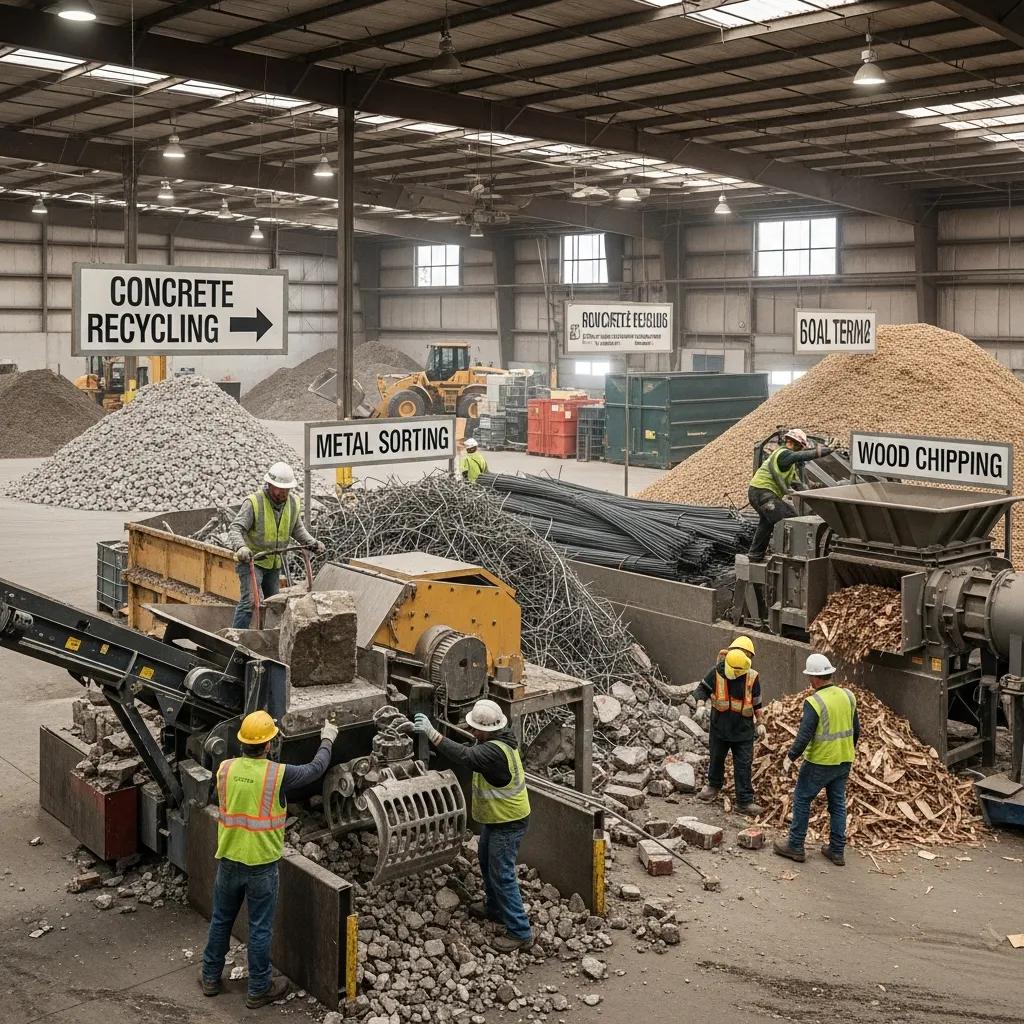
Proper waste disposal and recycling minimize environmental impact and support regulatory compliance. Best practices include segregating materials on-site, directing recyclable streams to appropriate processing facilities, and applying approved methods for hazardous and non-recyclable waste. Delray Beach contractors often collaborate with local recycling centers and waste management services to ensure sustainability and compliance.
- Waste Segregation : Separate recyclable materials from non-recyclable waste during demolition.
- Recycling Processes : Utilize recycling facilities to process materials such as concrete, metal, and wood, prioritizing local facilities to reduce transportation emissions.
- Disposal Methods : Follow approved disposal methods for hazardous and non-recyclable waste, maintaining proper documentation for local authorities.
What Equipment and Techniques Are Utilized in Modern Commercial Demolition?
Modern commercial demolition employs specialized equipment and proven techniques to maximize efficiency and maintain safety. Understanding machinery capabilities enables contractors to select appropriate tools for project needs. In Delray Beach, equipment choices also consider environmental noise restrictions and site accessibility.
Which Machinery Types Are Most Effective for Different Demolition Methods?
Different demolition methods require specific machinery. Common equipment includes excavators for structural removal, bulldozers for site clearance and grading, and crushers for reducing concrete and other hard materials for recycling.
- Excavators : Ideal for large-scale demolitions, excavators efficiently dismantle structures.
- Bulldozers : Used for clearing debris and leveling the site post-demolition.
- Crushers : Effective for breaking down concrete and other hard materials for recycling.
How Do Advanced Technologies Enhance Safety and Efficiency?
Technological innovations have significantly improved safety and efficiency in demolition. Notable advances include aerial site assessments, remote operation of heavy equipment, and integrated monitoring systems for real-time safety oversight. In Delray Beach, drones and remote technologies help minimize disruption to nearby residential and commercial areas.
- Drones for Site Assessment : Provide aerial views to identify hazards and monitor progress without intrusive site visits.
- Remote-Controlled Machinery : Enhances safety by allowing operators to control equipment from a safe distance, reducing exposure to hazards.
- Safety Monitoring Systems : Track safety compliance and identify risks in real-time, enabling prompt responses.
The integration of advanced technologies, such as drones, is increasingly recognized for enhancing site management and safety.
Drones in Demolition: Modern Equipment for Site Management
This section explores the use of multirotor drones in construction management, including site surveying, progress monitoring, logistics, on-site construction, maintenance, and demolition. It also examines applications relevant to quality assessment and control to inform quality managers.
Applications of multirotor drone technologies in construction management, Y Li, 2019
How Is Post-Demolition Site Clearance Conducted to Ensure Compliance?
Post-demolition site clearance is a crucial phase that ensures the site meets safety and regulatory standards. Clearance activities include complete debris removal, contamination checks, and preparation for subsequent use. In Delray Beach, this phase often involves coordination with local environmental agencies to comply with stormwater and soil protection standards.
What Are Best Practices for Debris Removal and Site Restoration?
Best practices for debris removal and site restoration involve systematic debris management, application of effective restoration techniques, and verification that all activities comply with local environmental and building regulations.
- Debris Management : Develop a plan for systematic debris removal to maintain site safety and minimize environmental impact.
- Restoration Techniques : Use methods that restore the site to its original condition or prepare it for new construction, considering local soil and vegetation conditions.
- Compliance with Regulations : Ensure all clearance activities comply with Delray Beach regulations and environmental standards, including erosion control measures.
How Does Recycling Contribute to Sustainable Demolition Practices?
Recycling is integral to sustainable demolition. It reduces landfill demand, conserves resources, and can offset project costs through material recovery. Compliance with recycling standards also enhances a contractor’s regulatory standing and community reputation in Delray Beach.
- Environmental Benefits : Reduces landfill waste and conserves natural resources.
- Cost Savings : Recycling materials lowers disposal costs and can generate revenue from salvaged materials.
- Regulatory Compliance : Adhering to recycling regulations improves a contractor’s reputation and compliance status.
The broader environmental impact of demolition waste underscores the need for integrated and sustainable waste management strategies.
Sustainable Construction & Demolition Waste Management
Construction and demolition (C&D) waste generated by the Canadian construction industry accounts for 27% of total municipal solid waste disposed in landfills. Over 75% of construction industry waste has residual value and could be recycled, salvaged, or reused. The need for comprehensive waste management mechanisms, technologies, standards, and policies is widely recognized. Given increasing C&D waste volumes, limited landfill capacity, and the long-term environmental, economic, and social impacts of disposed C&D waste, sustainable C&D waste management is essential to protect public health and ecosystems.
An overview of construction and demolition waste management in Canada: a lifecycle analysis approach to sustainability, K Hewage, 1994
Frequently Asked Questions
What are the common challenges faced during commercial demolition projects in Delray Beach?
Common challenges include managing unforeseen structural issues, adhering to strict timelines, and maintaining compliance with safety and environmental regulations. Hidden hazards such as asbestos or structural defects can cause delays, and coordination with regulators and utilities often complicates scheduling. Additionally, Delray Beach contractors must navigate local noise ordinances and community concerns. Thorough planning and clear stakeholder coordination help mitigate these risks.
What are the financial implications of improper demolition practices?
Improper demolition can lead to significant financial consequences, including regulatory fines, increased insurance premiums, legal costs, and revenue losses from project delays. Remediation, rework, and additional safety measures further escalate costs. Investing in training, competent equipment, and compliance reduces these financial risks.
How can technology improve safety in demolition projects?
Technology enhances safety through tools such as aerial site assessments, remote-operated equipment, and real-time monitoring systems. These technologies aid hazard identification, enable safer equipment operation, and provide continuous oversight of safety protocols, reducing exposure to risks.
What are the best practices for training workers in demolition safety?
Best practices include structured onboarding covering safety procedures, equipment operation, and emergency response, supplemented by regular refresher training. Practical drills and simulations improve preparedness, and fostering a culture that encourages reporting unsafe conditions enhances overall site safety.
What are the steps in a demolition process?
The demolition process typically involves several key steps: initial site assessment and planning, obtaining necessary permits, hazardous material removal, structural demolition using appropriate machinery, debris removal and sorting, waste disposal and recycling, and final site clearance and restoration. Each step requires careful coordination to ensure safety and compliance.
How much to charge for commercial demolition?
Pricing for commercial demolition depends on factors such as project size, complexity, location, required permits, hazardous material handling, and disposal costs. Contractors typically base charges on labor, equipment usage, waste disposal fees, and overhead. Providing detailed estimates and including contingencies for unexpected expenses is essential.
How long does it take to demolish a commercial building?
The duration of demolishing a commercial building varies widely depending on building size, construction type, demolition method, site conditions, and regulatory requirements. Small to medium-sized buildings may take days to weeks, while larger or more complex structures can require several months. Effective planning and resource allocation optimize timelines.
Conclusion
Successful commercial demolition in Delray Beach relies on meticulous planning, strict adherence to safety protocols, and compliance with region-specific environmental regulations. By following these essential steps, contractors and property owners can minimize risks and ensure efficient project delivery. For further guidance, consult the comprehensive resources and best-practice guides referenced herein, and engage with local Delray Beach authorities to guarantee full compliance and community support.