Essential Commercial Demolition Services | Project Factors
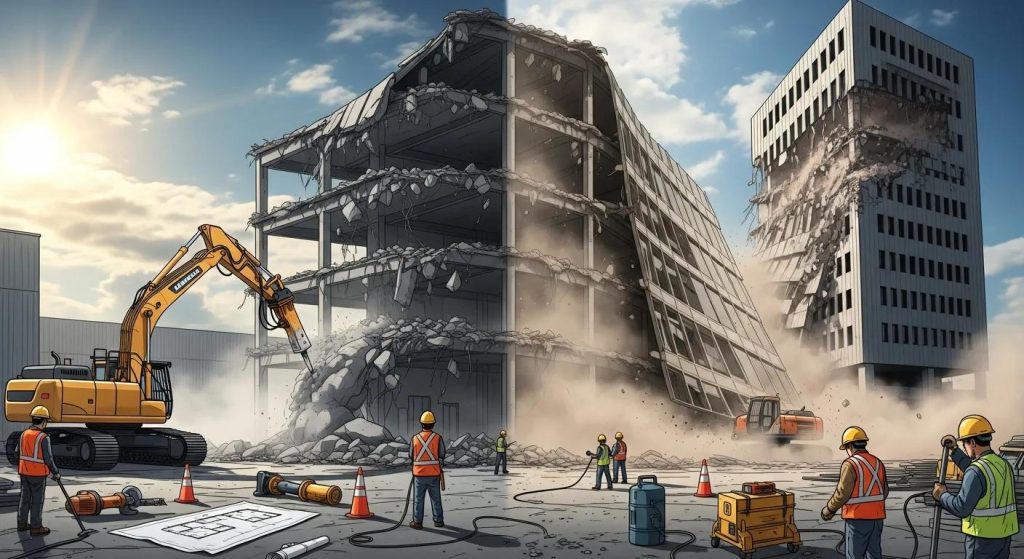
Mastering Commercial Demolition Essentials
Commercial demolition projects require meticulous planning, strict adherence to safety regulations, and robust waste management systems. This guide examines the principal steps in commercial demolition, the planning processes involved, mandatory safety measures, and the cost factors associated with commercial demolition. Readers will obtain practical, actionable insights to prepare for forthcoming projects.
What Are the Key Steps in the Commercial Demolition Process?
The commercial demolition process comprises three primary phases: site assessment, planning, and execution. A comprehensive site assessment identifies hazards and determines the optimal demolition approach. The planning phase secures required permits and establishes a detailed schedule. Execution involves controlled dismantling of structures while enforcing prescribed safety protocols.
How Is Demolition Project Planning Conducted for Commercial Sites?
Planning for commercial demolition is a multidisciplinary exercise. A site evaluation assesses building condition and adjacent risks. That evaluation informs the project timeline and phase durations. Resource allocation ensures the availability of equipment and qualified personnel when required.
What Permits and Regulatory Approvals Are Required?
Prior to commencement, projects must obtain relevant permits and regulatory approvals. These commonly include:
- Local Regulations : Compliance with city or county regulations is essential to avoid legal issues.
- Environmental Permits : These permits ensure that the demolition does not adversely affect the environment.
- Safety Compliance Approvals : These are necessary to confirm that all safety measures are in place before demolition begins.
How Are Safety and Compliance Ensured in Commercial Building Demolition?
Safety and regulatory compliance are primary objectives in commercial demolition. Project teams must implement comprehensive safety protocols to protect workers and the public. Regular compliance inspections verify adherence to standards. Personnel training ensures staff possess the required competencies for safe on-site operations.
What Safety Protocols and Assessments Are Mandatory?
Mandatory safety protocols include:
- Risk Assessments : Identifying potential hazards before work begins.
- Safety Gear Requirements : Ensuring all workers wear appropriate personal protective equipment (PPE).
- Emergency Procedures : Establishing clear protocols for emergencies to ensure quick and effective responses.
How Are Hazardous Materials Identified and Managed?
The identification and management of hazardous materials are integral to demolition. This process includes thorough inspections, controlled handling procedures to limit exposure, and disposal in accordance with applicable regulations to protect public health and the environment.
Which Equipment and Techniques Are Used in Commercial Demolition?
Equipment and techniques are selected to match project requirements. Commonly utilised equipment includes:
- Excavators : Essential for large-scale demolitions, providing power and efficiency.
- Bulldozers : Used for clearing debris and preparing the site for further work.
- Crushers : Employed to break down concrete and other materials for recycling.
What Types of Demolition Equipment Are Commonly Utilized?
Additional commonly used tools include:
- Hydraulic Breakers : For breaking up concrete and masonry.
- Sawing Equipment : For precise cuts in structures.
- Dust Control Systems : To minimize airborne particles during demolition.
How Do Structural Demolition Methods Vary by Project?
Structural demolition methods vary according to building type and constituent materials. Method selection depends on factors such as building height, material composition, and site constraints. Some projects require implosion techniques for tall structures, while others employ selective demolition for historically significant sites.
What Are Effective Strategies for Demolition Waste Management and Environmental Compliance?
Effective waste management reduces environmental impact and supports regulatory compliance. Key strategies include:
- Waste Segregation : Separating recyclable materials from non-recyclable waste to promote recycling efforts.
- Recycling Practices : Implementing processes to recycle materials such as concrete, metal, and wood.
- Compliance with Environmental Laws : Adhering to local and federal regulations regarding waste disposal and recycling.
How Is Waste Segregated and Disposed of Responsibly?
Responsible disposal requires designated containers for different waste streams, the use of licensed disposal services, and assessment of the environmental impacts of chosen disposal methods.
What Environmental Regulations Govern Demolition Waste?
Demolition waste is governed by multiple regulatory regimes. Projects must comply with local and federal statutes, adhere to established compliance requirements, and understand the penalties associated with non-compliance.
Globally, stringent regulatory targets — exemplified by the European Union — underscore the importance of effective construction and demolition waste management in advancing environmental sustainability.
EU C&D Waste Management & Circular Economy
Construction and Demolition (C&D) waste accounts for approximately one third of total waste generated in the European Union and includes waste from construction, excavation, building and demolition activities. The EU Waste Framework Directive (WFD 2008/98/EC) required Member States to achieve a minimum C&D waste recovery target of 70% by 2020. Eurostat reported a 2016 recovery quota of 90% and an average recycling rate of 75%. In 2019, the European Commission published the Report on the implementation of the Circular Economy Action Plan, which promotes adoption of the circular economy to mitigate impacts on climate and ecosystems.
European potential towards a circular built environment-The role of pre-demolition audit, 2020
What Factors Influence Commercial Demolition Costs and Project Timelines?
Several factors influence the cost and duration of commercial demolition projects. Key considerations include:
- Labor Costs : The cost of skilled labor can vary based on project complexity and location.
- Material Costs : Fluctuations in material prices can impact overall project budgets.
- Project Complexity : More complex projects may require additional time and resources.
How Are Cost Components and Budgeting Determined?
Budgeting requires a detailed cost breakdown that accounts for labour, equipment rental, disposal fees, and other project expenses. Effective budgeting strategies and contingency planning help manage financial risk throughout the project.
What Are Typical Project Duration Considerations?
Typical duration considerations include weather conditions, site accessibility, and project scope. Commercial demolition projects commonly range from a few days to several weeks, depending on complexity. Identifying common causes of delay supports more accurate planning and risk mitigation.
How Is Post-Demolition Site Restoration Planned and Executed?
Post-demolition site restoration ensures the site is safe and prepared for subsequent use. The process involves restoration planning, effective execution strategies, and strict adherence to environmental compliance obligations.
- Restoration Planning : Developing a comprehensive plan for site restoration that includes landscaping and infrastructure improvements.
- Execution Strategies : Implementing the restoration plan effectively to meet project goals.
- Environmental Compliance : Ensuring that all restoration activities comply with environmental regulations.
What Are Common Site Restoration Practices After Demolition?
Common restoration practices include replanting vegetation, improving soil quality to support future use, and implementing erosion-control measures during and after restoration.
How Does Restoration Integrate with Environmental Compliance?
Integration of restoration and compliance requires adherence to land-use regulations, application of industry best practices, and systems for monitoring and reporting progress to regulatory authorities.
| Cost Component | Description | Estimated Value |
|---|---|---|
| Labor Costs | Skilled labor for demolition work | $50-$100/hour |
| Equipment Rental | Costs for machinery and tools | $1,000-$5,000/week |
| Disposal Fees | Fees for waste disposal services | $200-$1,000/load |
The table summarises principal cost components for commercial demolition and underscores the need for comprehensive budgeting and financial planning.
Understanding these essential factors is critical to successful demolition delivery. From planning and safety to waste management and cost control, each element influences project outcomes. Adherence to best practices and regulatory requirements reduces environmental impact and enhances safety.
Frequently Asked Questions
What are the common challenges faced during commercial demolition projects?
Common challenges include unforeseen structural defects, the presence of hazardous materials, and regulatory compliance obligations. Adverse weather can delay works and increase costs. Coordination with authorities and third parties adds complexity. Rigorous planning and clear stakeholder communication mitigate these risks.
How can project managers ensure effective communication among stakeholders?
Project managers should implement a formal communication plan that defines roles, responsibilities, reporting frequency and channels. Regular meetings, documented records and a centralised project platform maintain alignment. Transparent reporting enables timely issue resolution and informed decision-making.
What role does technology play in modern demolition projects?
Technology enhances planning, safety and operational efficiency. Building Information Modeling (BIM) supports detailed demolition planning and visualization. Drones assist with site assessments and monitoring. Sensor-equipped machinery improves precision and reduces risk. Project management software centralises documentation and communication.
How can companies ensure compliance with environmental regulations during demolition?
Companies must conduct pre-demolition environmental assessments and implement a compliant waste management plan. Staff training on environmental procedures and maintenance of accurate disposal and recycling records are essential. Regular audits and inspections verify compliance and identify corrective actions.
What are the best practices for recycling materials from demolition projects?
Best practices include conducting a pre-demolition audit to identify recyclable streams such as concrete, metal and timber, establishing agreements with recycling facilities, implementing on-site segregation to prevent contamination, and training personnel on recycling protocols to improve recovery rates.
What factors should be considered when selecting a demolition contractor?
When selecting a contractor, evaluate their experience with comparable projects, safety performance, and regulatory compliance. Review references and case studies. Assess equipment and technological capabilities, their waste management approach, and obtain detailed proposals and schedules to confirm alignment with budget and timelines.
Conclusion
Mastering these factors is essential to ensure safety, efficiency and regulatory compliance in commercial demolition. A clear understanding of planning, safety protocols and waste management enables stakeholders to manage demolition risks with confidence. Adherence to industry best practices improves project outcomes. For additional resources, consult our comprehensive guides on commercial demolition.